
Medicare Part D late enrollment penalties: what to know
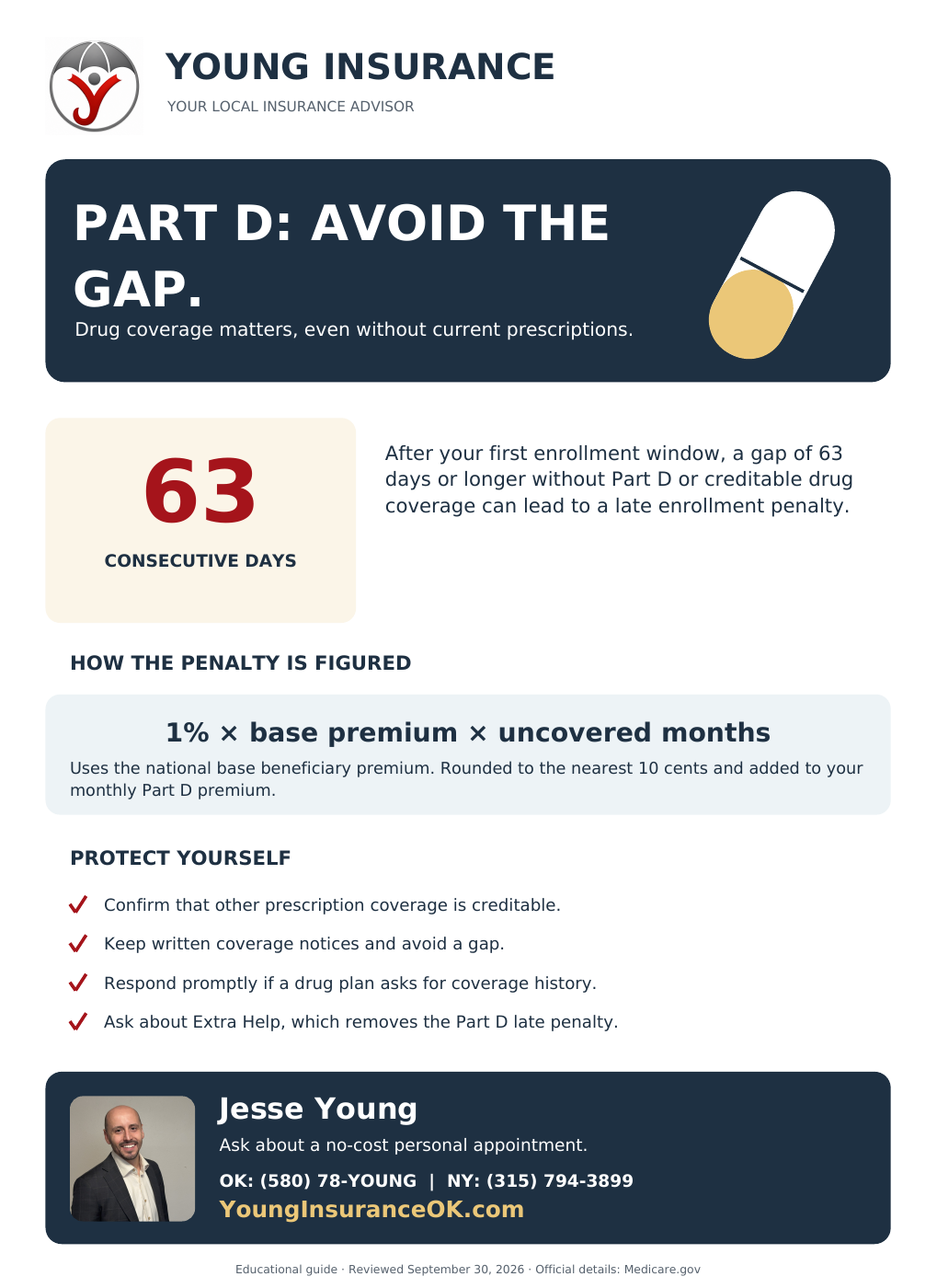
Learn about creditable drug coverage, the 63-day gap, and how to avoid a Part D late enrollment penalty.
You may not take prescription medicines today, but drug coverage is still a decision to review when you become eligible for Medicare. Waiting without qualifying coverage can create an ongoing Part D late enrollment penalty.
What can trigger a penalty?
After your Initial Enrollment Period ends, going 63 consecutive days or longer without Part D or other creditable prescription drug coverage can lead to a penalty when you later enroll.
Creditable drug coverage is expected to pay, on average, at least as much as standard Medicare drug coverage. Paying cash for medicines or using a discount card is not a substitute for creditable insurance.
How is the penalty figured?
Medicare uses the number of full uncovered months, multiplied by 1% of the national base beneficiary premium. The result is rounded to the nearest 10 cents and added to your monthly Part D premium. Because the base premium can change each year, the penalty amount can change too. It generally continues for as long as you have Medicare drug coverage.
What if you have employer or other coverage?
Ask your employer or insurer whether your prescription coverage is creditable and keep the written notice. Do not assume that all employer plans, high-deductible plans, or other insurance meet the requirement. VA drug benefits may be creditable; review how any other insurance works before adding or dropping coverage.
When you retire or lose drug coverage, confirm your enrollment deadline promptly. The special enrollment deadline and the 63-day penalty rule are separate issues.
Keep the right proof
Save creditable-coverage notices and records of the dates your coverage began and ended. If your new drug plan requests information about earlier coverage, respond by the deadline.
A clarification about forms: CMS-L564 verifies employer coverage for Part B enrollment. For Part D, follow your drug plan’s instructions for documenting creditable prescription coverage. Follow the instructions your drug plan gives you.
How can you reduce the risk?
- Review drug coverage when first eligible, even without current prescriptions.
- Confirm whether existing coverage is creditable.
- Avoid an extended gap when coverage ends.
- Keep your notices and respond to information requests.
- Ask about Extra Help; people receiving it do not pay a Part D late enrollment penalty.
Jesse Young can help you identify what to check before changing your prescription coverage.